
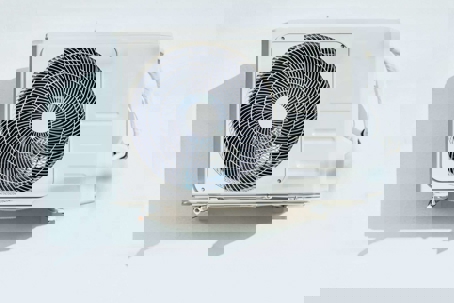
As of January 2025, the United States has new air conditioning (AC) refrigerant rules. The regulations aim to protect the environment and reduce harmful emissions.
If you own an AC system or plan on purchasing one, you must learn about these updates. Knowing more about them will help you make informed decisions. Fairway Heating and Cooling reviews the 2025 AC refrigerant regulations and why they changed. Then, we reveal how these changes will affect you.
What Are AC Refrigerants?
Refrigerants are chemical compounds that absorb and release heat to cool your home. They circulate through your AC system, remove heat from inside, and release it outside.
Here are some of the most common refrigerants:
- Freon®
- R-12
- R-22
- R-410A (Puron®)
- R-454B (Puron Advance
 )
) - R-134A
Refrigerants are the main refrigerant types:
- Chlorofluorocarbons (CFCs) - Freon and R-12 are types of CFCs. You can find CFCs in most older ACs. They contain chlorine and are dangerous because they deplete the Earth’s ozone layer. Both are irritants to the skin and respiratory system. They can cause cardiac arrhythmias, asphyxia, and dizziness.
- Hydrochlorofluorocarbons (HCFCs) - R-22 and R-124 are some types of HCFCs. Even with less chlorine, they can still harm the environment, just as CFCs do. Recently, the U.S. has been working to phase out HCFCs because of their harmful effects.
- Hydrofluorocarbons (HFCs) - Puron is a type of HFC. They have no chlorine and are not harmful. HFCs are the newer refrigerants used to replace the older toxic variants.

How Do Refrigerants Harm the Environment?
Refrigerants are necessary for cooling your home. The only problem is that some are toxic to people and the environment upon exposure. HFCs don’t harm the ozone layer like CFCs and HCFCs do. However, they still play a significant role in global warming. HFCs are potent greenhouse gases with high global warming potentials (GWPs).
Their greenhouse gases (GHGs) trap heat in the atmosphere. Some HFCs have GWPs thousands of times more potent than carbon dioxide (CO₂). Sadly, HFC use is rising globally. This is because more people demand AC and refrigeration. Use has also increased due to the phaseout of ozone-depleting substances like CFCs. Consequently, high use has contributed to global warming, exacerbating climate change.
Exposure must occur to inflict this damage. Although refrigerants usually stay inside your AC system, leaks happen.
Refrigerant leaks may be a result of the following:
- Your system is old and worn down
- An AC part breaks or cracks
- Improper installation or repair
- Improper disposal
Once the refrigerant leaks, harmful gases enter the air. Even small leaks can have a long-lasting impact on the Earth.
Why Are Refrigerant Regulations Changing?
The federal government recognizes refrigerants are dangerous. The Environmental Protection Agency (EPA) will reduce HFC refrigerants to lower their harmful impact.
The U.S. passed the American Innovation and Manufacturing (AIM) Act in 2020 to address the problem. This law instructed the EPA to reduce HFC use by 85% over the next 15 years.
New 2025 AC Refrigerant Regulations
The EPA mandated manufacturers to switch to refrigerants with a GWP of 700 or less by 2025. You can install new systems with a GWP over 700 until January 1, 2027. However, manufacturers must make or import all parts before January 1, 2026.
In summary, the regulations will help with the following:
- Reducing the production and use of high-global warming potential (GWP) refrigerants
- Encouraging low-GWP refrigerant adoption (i.e., R-32 and R-454B)
- Requiring manufacturers to design AC systems compatible with new refrigerants

How Do the Regulations Affect ACs?
New AC Units Must Use Low-GWP Refrigerants
Manufacturers can’t make new AC systems using high GWP refrigerants like R-410A. All new systems must use refrigerants with GWPs of 700 or less.
Improved options include options like:
- R-32
- R-454B
Both have a lower climate impact compared to R-410A.
Old Unit Sales Will Stop
AC companies can’t sell new systems that use banned refrigerants starting in 2025. Systems installed after that date must meet the new standards.
New Safety and Training Regulations
Some of the new refrigerants are flammable. So, the EPA has new regulations and training programs to ensure safe servicing. Only trained and certified HVAC technicians can work with these systems.
No Ban on Existing Systems
You don’t need to replace your current system in 2025 if it uses R-410A. You can also use your old system with CFCs. The rules only apply to new systems.
How Do the New Regulations Affect You?
Here’s how the 2025 AC refrigerant changes affect you:
New AC Systems
Any system you install in 2025 or later will have low-GWP refrigerant. So, systems might cost more due to better technology and safety features.
Current AC Systems
You can continue to use your AC if it uses R-410A. However, its supply will likely decrease. So, repairs and refrigerant refill costs may increase. Properly maintain your system to avoid leaks.
Proper Certifications for Maintenance and Repairs
Make sure your service provider has updated certifications for handling the latest refrigerants.
Reduces Environmental Impact
You reduce your environmental impact when upgrading to a low-GWP refrigerant system.
What You Can Do to Prevent Any Issues?
Here are some tips for preventing issues with the 2025 refrigerant regulations:
Stay Informed
Keep up with the latest information on refrigerants. Staying informed helps you avoid rule violations. You must reference reliable sources, like the EPA.
Maintain Your System
Regular maintenance can extend the life of your AC system and improve efficiency.
Plan Ahead
Plan ahead with all AC servicing. Consult a certified HVAC professional before changing your current system.
Trust HVAC Professionals
Trust HVAC professionals to guide you every step of the way. They will make sure your system adheres to the 2025 changes.
Contact Fairway Heating and Cooling for Your Next AC Servicing!
The 2025 refrigerant changes make AC systems safer for people and the planet. These changes might be tough to get used to, but they will make a positive impact. Understanding these updates and taking proactive steps will ensure your home is eco-friendly.
Consult Fairway Heating and Cooling experts for help with the 2025 changes. We will inspect your current system and make the proper recommendations.
We specialize in AC repair, maintenance, and installation. Hiring our specialists gives you top-notch AC services at a fair price.
Contact us today to speak with one of our professionals or to schedule an estimate!
The post 2025 AC Refrigerant Changes (and How It Affects You) appeared first on Fairway Heating and Cooling, LLC.